Fishmeal
Fishmeal Market
- 70% of WW production comes from Peru/Chile (source)
- 80% of WW production comes from 10 countries (Chile 30%, Peru 15%, China, Thailand, USA, Denmark, Iceland, Norway, Japan and Spain - source).
- Active markets: Chile, Peru, Iceland (still live?)
Menhaden - Part of Clupeidae family, which includes herring, sardines, shad. The Menhaden is also known as the mossbunker and pogy.
Hammersmith Ltd weekly reports
Menhaden Resource Council (trade group)
Reference: Information Sites
GlobeFish.org (Fish Info Network)
The Fish Site.com
Good analysis, market info, etc.
- Fishmeal Report
Dyer Aqua | Sebastian, FL
Dyer Aqua
New species aquaculture
- Pompano (Trachinotus carolinus) products
- Sebastian, FL HQ
- Vero Beach hatchery (Harbor Branch?)
- Partner: Save On Seafood (processing) – St Petersburg, FL
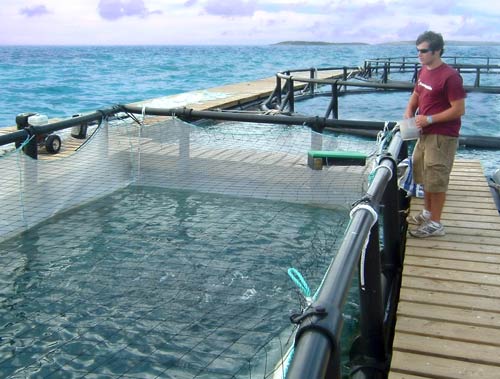
- Grow out: Spanish Wells, Bahamas
- Grow out: Belize City
- Parent/Partner: Maritech
Harbor Branch Oceanographic Institution
Broad, global oceanographic expertise, including research into aquaculture (website)
Aquaculture Division
- Research – food (including pompano) & ornamental fish, crustacean & mollusk, aquaculture feeds and animal health
- Conferences, including their own: Sustainable Marine Fish Culture Conference
- Includes vocational education/training program
Reference: Aquaculture Producers
- American Seafood
- Kent Seafood (Calif farmed striped bass)
- GreatBay Aquaculture (Atlantic cod, black sea bass, cobia, summer flounder) - Portsmouth, NH
Equipment, Engineering, etc.
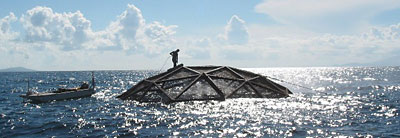
- Ocean Farm Technologies - maker of the undersea cages; rec'd investment from Aquacopia Ventures, and then a follow on from Aquacopia and others.
- OceanSpar - more cages
SnapperFarm (Brian O'Hanlan)
Info - farm location (map)
News
- July 2006 - receives investment from Aquacopia Ventures
Tuna ranching | National Geographic
Here is an article from a recent issue of National Geographic highlighting the fisheries crisis. The lead article is on tuna ranching. As you will read, this is likely a poor fit for Avalon. It is far from sustainable.
The slides are also interesting. There is one of the cobia farm in Puerto Rico (the lone bright spot photo) and one of Lake Victoria Nile Perch carcasses being sold to local Tanzanians.
Marine Aquaculture Task Force
2007 Report - produced by Woods Hole Oceanographic Institution, with funding from Pew Charitable Trust and the Lenfest Foundation.
- see especially Dr. Daniel Benetti, director of the Aquaculture Program at University of Miami Rosenstiel School of Marine & Atmospheric Science
Reference: Large Producers
Salmon (global list)
- Alf Lone Fiskeoppdrett
- Aquafarms (Salmones Multiexport - Chile)
- Aquascot
- AquaSeed Corp.
- Aqua Gen
- Atlantic Salmon of Maine
- Buckman's Creek
- Brithish Columbia Salmon Farmers Association
- British Columbia Salmon Marketing Council
- Chilean Seafood Exchange
- Fiskekultur
- Fjord Seafood
- Grieg Seafood
- Landcatch
- Marine Farms
- Marine Harvest Salmon
- Hydro Seafood
- New Zealand King Salmon Company
- Pacific Star
- Prince William Sound Aquaculture Corp.
- Salmon: Spirit of the Land and Sea
- Salmon Aquaculture Review Final Report
- Scottish Quality Salmon
- Scottish Salmon
- Stolt-Nielsen
- Stolt Sea Farm
- True North Salmon
- Ventisqueros
Consultants
Aquasol (fishfarming.com)
The below link is the company I made contact with. I spoke with the principal briefly today and I am going to setup a follow-up call with all of us. I liked what he said as he can do feasibility studies on anything we want to go after including buying of existing farms. More importantly he is business focused versus strictly scientific. I want to glean as much info as possible for free but if we go with someone like this we will need to pay at some point. Some general thoughts from him:
- Aqua culture is the #1 food industry growth area.
- Interesting areas in the world to do this include Europe, Africa (Lake Victoria area), Puerto Rico, and
- Money is starting to flow into the area given the strong demand for fish.
- Consolidation is occurring in certain areas. Stay away from salmon given that large corporations are dominant in that area.
- Some failures of fish farms have been a result of competitive pressures from Asian companies on price.
- Tilapia farming is one of his favorite areas as it can be eaten by the general public without the fishy smell.
- Well run fish farms can generate 30%+ IRRs (he may be blowing smoke up my ass).
He is located in
Nautilus Consultants (UK) - from Mekong River Commission report (2002)
Financial Models
- from Mekong River Commission (pdf) 2002 analysis & report
- Univ of Hawaii
- Univ of FL
Public Policy Summary
Dec 11, 2006 - CSMonitor (editorial) - Lame duck Congress passes update to fisheries legislation covering offshore preservation. It includes authorization for regional cap & trade systems to allow fisherman to cope with ever tightening quotas and other limits.
Jan 10, 2007 - CSMonitor - On a new report from the Marine Aquaculture Task Force which recommends are variety of guidelines and goals for federal policy on offshore fish farming.
Letter appearing in CSMonitor re: Jan 10 2007 article:
How offshore fish farms can be safe
The Jan. 10 article, "Fish farms in the ocean? Group pushes Congress to pass tough rules," provided a fine overview of offshore aquaculture's potential environmental risks, as outlined in the recent report of the Marine Aquaculture Task Force. However, another of the report's key findings was that substantial public and private investment in offshore aquaculture R&D is essential for building an industry that will benefit consumers and safeguard the environment.
At the University of New Hampshire, eight years of research and technology development have led us to conclude that a commercially viable and environmentally sound offshore aquaculture industry is an option for the US.
At the same time, our experience tells us that further R&D will be needed to address the challenges outlined in the task force's report in a way that satisfies all stakeholders.
As a nation, the US has before it an opportunity to get this right. A combination of public and private investment can create a nationally coordinated system of regional R&D programs that build on 30 years of lessons learned from coastal fish farming.
Such a system will provide technology and knowledge to develop and regulate an industry that relieves pressure on beleaguered wild fisheries, provides a healthy food source for US citizens, and ensures that the fish we eat are the result of sustainable practices with minimal environmental impact.Richard Langan
Durham, N.H. Director, Atlantic Marine Aquaculture Center, University of New Hampshir
